Ecosystem Development and Process Mapping in AgTech
How a growing AgTech startup gained clarity on its operations, aligned its teams, and built the partnership infrastructure to scale internationally, without burning its runway.
The Business Challenge
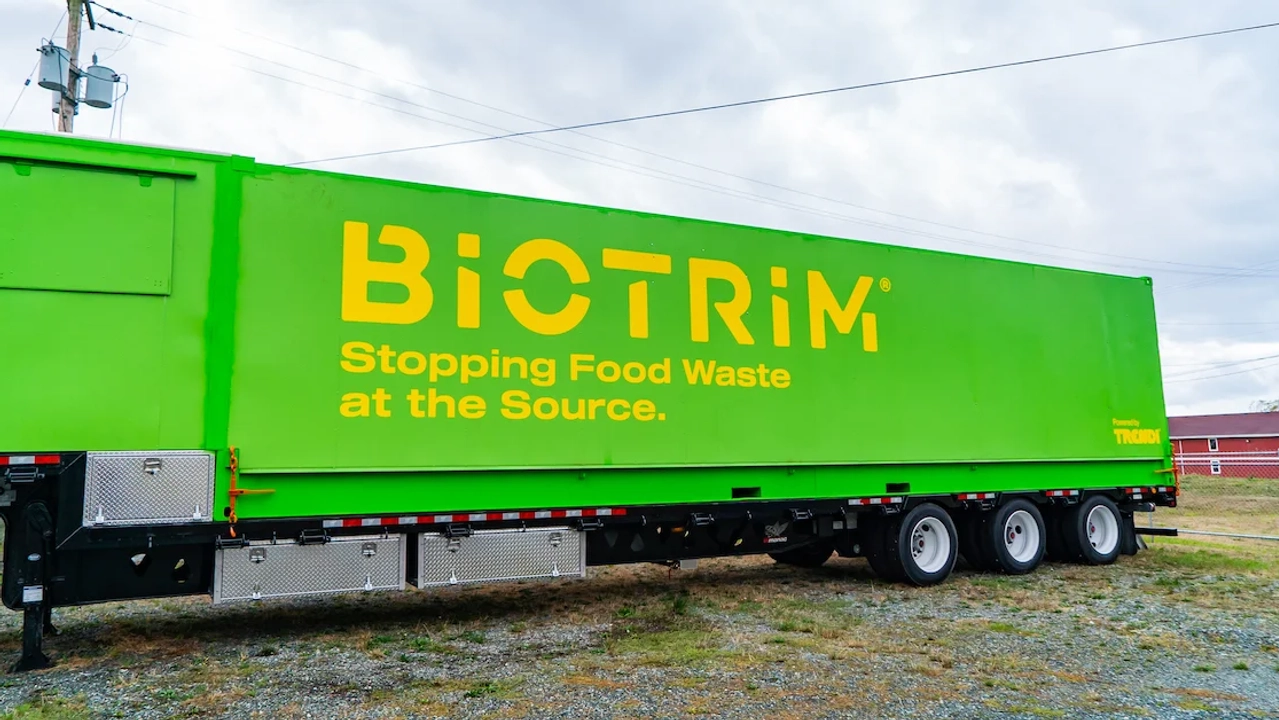
Trendi had done something genuinely difficult: it had developed proprietary technology for food waste valorization and secured a partnership to pilot the project internationally, starting in Ecuador. But as the company moved from concept to execution, cracks in the operational foundation began to show.
Teams were working in silos. Opportunities were being chased without a consistent method for evaluating whether they were actually worth pursuing. Business development, marketing, and R&D were operating on different timelines with different priorities and no shared framework for how decisions got made or handed off.
For a company at this stage, past early concept and moving into real market traction, the problem wasn’t ambition or technology. It was operational cohesion. And without it, the risk was real: the company would generate activity without generating profitability.
This is a pattern common to fast-moving startups targeting international expansion. The market pull is there. The product is real. But the internal scaffolding, the systems, processes, and cross-functional discipline, hasn’t kept pace with the ambition.
What Made This Hard
No ecosystem to connect the right partners. Trendi needed to build relationships across farms, research institutions, and distribution networks in multiple regions simultaneously. None of that infrastructure existed yet.
Teams operating in silos. Business development was pursuing leads that R&D couldn’t support on the required timeline. Marketing was generating interest without a clear handoff process into delivery. The result was wasted effort and growing internal friction.
No consistent way to evaluate opportunities. Without a shared framework for assessing which partnerships and projects to pursue, the company was at risk of saying yes to everything, and executing nothing well.
No standardized process flow. There was no structure governing how decisions moved from idea to agreement to execution. Every deal was being handled differently, which made it impossible to learn, improve, or forecast reliably.
Investor pressure to demonstrate operational efficiency. As the company sought to justify its runway to investors, it needed to show not just traction but a credible path to profitability, and that required getting internal processes in order.
The Operational Approach
The engagement focused on three things: structure, alignment, and ecosystem development.
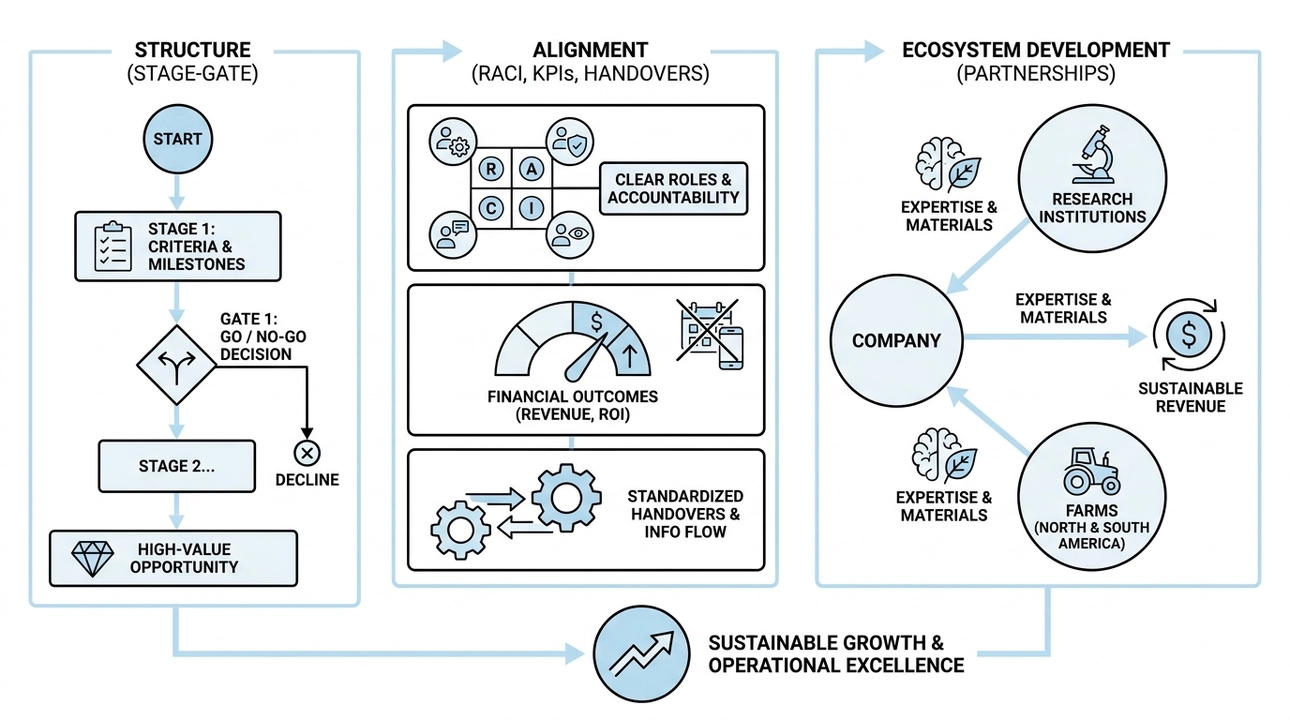
Introducing a Stage-Gate process. A formal Stage-Gate framework was implemented to ensure every opportunity was evaluated consistently before resources were committed. Each stage had clear criteria, defined milestones, and go/no-go decision points. This gave the company a way to distinguish between high-value opportunities worth pursuing and distractions worth declining, a critical capability for any team working with limited bandwidth.
Defining roles and accountability with a RACI framework. A RACI chart (Responsible, Accountable, Consulted, Informed) was developed to clarify who owned each part of the process. This eliminated the ambiguity that had been causing handoff failures between teams and created visible accountability at each stage of the pipeline.
Establishing KPIs tied to revenue and profitability. Rather than measuring activity (meetings held, deals pitched, conversations started), the teams were aligned around metrics that connected directly to financial outcomes: revenue potential, return on investment, and operational feasibility. This shifted the business development team’s focus toward high-value commodities, while giving technical and R&D teams realistic parameters to work within.
Standardizing cross-functional handovers. A communication plan was developed to govern how information moved between departments: project updates, timeline changes, and decision rationale. This sounds procedural, but in practice it was the difference between teams that trusted each other’s work and teams that constantly re-litigated decisions because they didn’t know what had already been agreed.
Building the partnership ecosystem. Strategic partnerships were developed with research institutions and local farms across North America and South America. These relationships served a dual purpose: providing the technical team with domain expertise and raw material access, while also establishing the commodity pipeline necessary to generate sustainable revenue from food waste valorization.
Execution: What Actually Happened
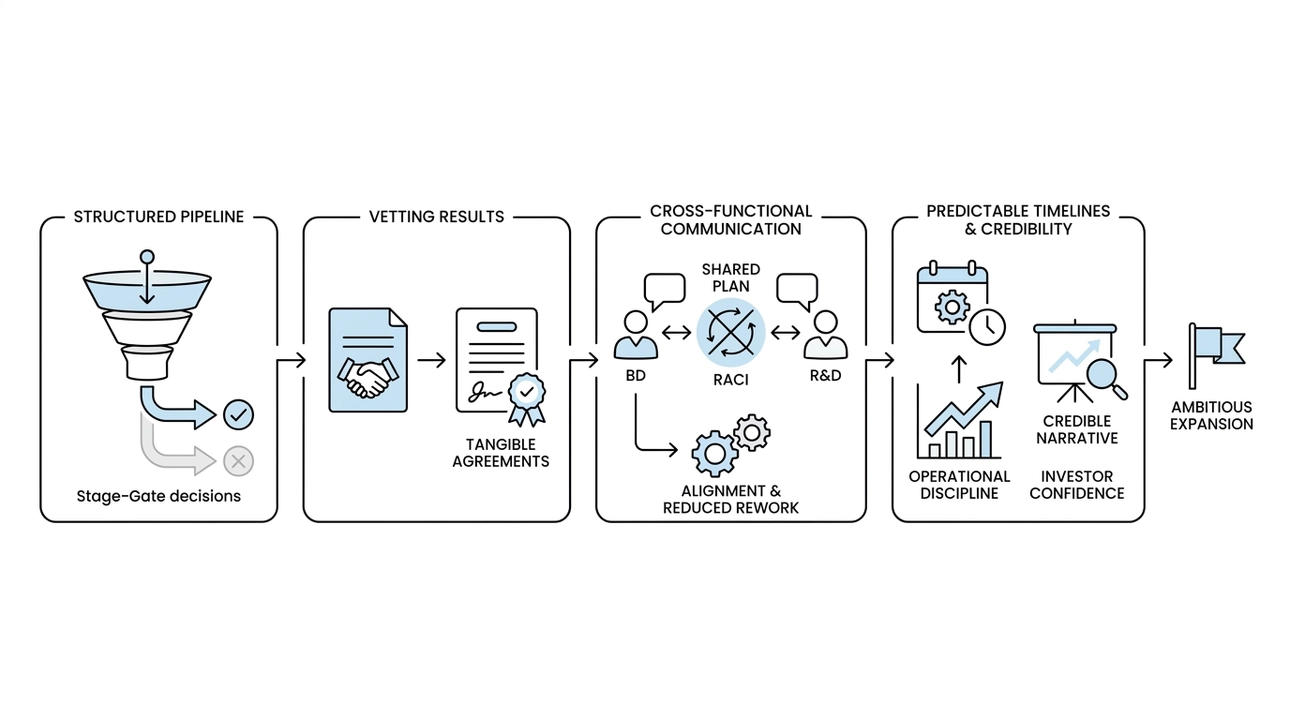
Opportunities moved through the pipeline in a structured way. With the Stage-Gate process in place, the team could track which partnerships were worth advancing and which weren’t, and make those decisions quickly, without lengthy internal debate.
Letters of Agreement were signed with high-value partners. The vetting process produced tangible results: actual agreements with the partners most aligned with Trendi’s commercial objectives.
Teams started communicating across functions. The shared communication plan and RACI structure meant that business development knew what R&D could realistically deliver, and R&D understood the commercial priorities driving inbound requests. This reduced the rework and misalignment that had been consuming significant time.
Budget and timelines became more predictable. With defined processes and clear accountability, the technical team could execute against realistic plans rather than constantly adjusting to shifting expectations. This was particularly important during periods of investor scrutiny, when demonstrating operational discipline was as important as demonstrating market traction.
The investor narrative became more credible. When the team could point to a structured opportunity pipeline, defined KPIs, and active international partnerships, the story shifted from “we’re working on it” to “here’s how we’re building this systematically.” That matters when you’re asking investors to continue backing a company with an ambitious expansion plan.
The Outcomes
Multiple high-value partnerships formalized through the Stage-Gate process, with signed Letters of Agreement establishing the commercial relationships needed to move the Ecuador pilot forward.
Improved cross-functional coordination across business development, marketing, and R&D, reducing the silos that had been slowing decision-making and creating internal friction.
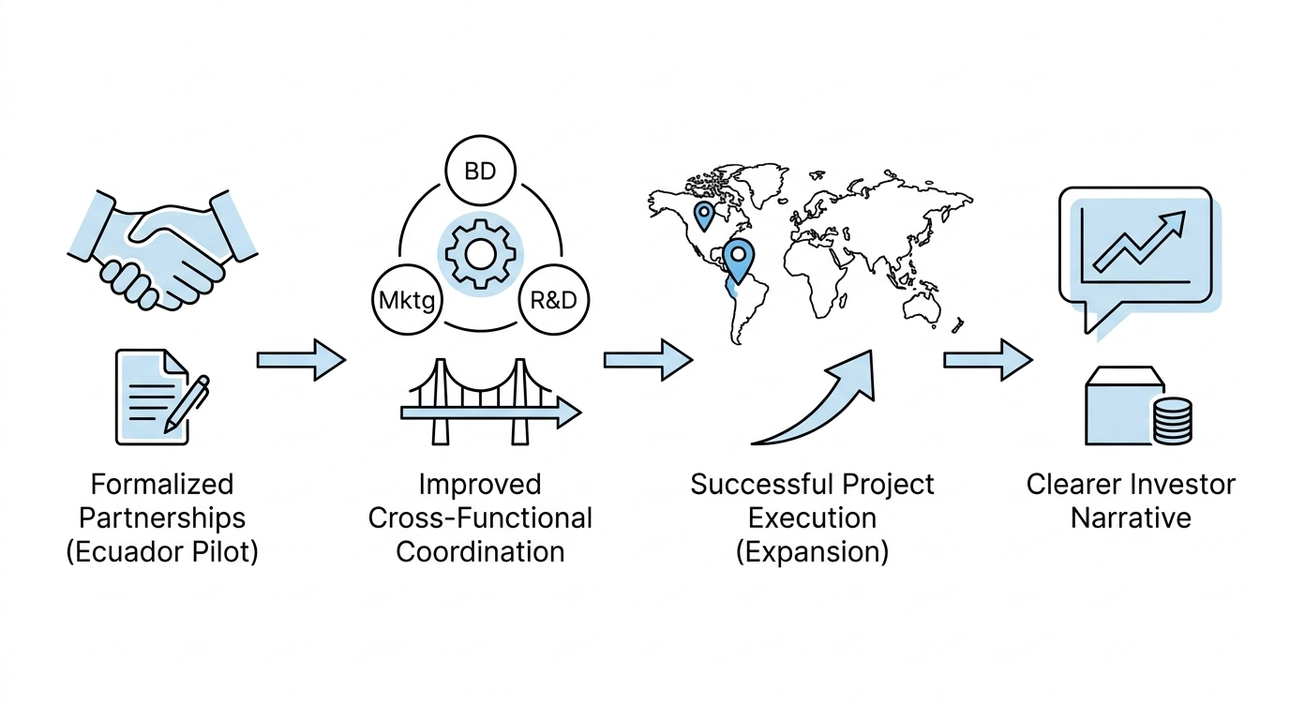
Successful project execution in Ecuador and North America, expanding the company’s operational footprint in the food waste valorization sector and validating the international expansion thesis.
A clearer investor narrative, grounded in operational structure and measurable pipeline progress rather than early-stage optimism alone.
What This Illustrates for Scaling Businesses
The Trendi engagement captures a challenge that almost every growing business faces at some point: the gap between the ambition to scale and the operational infrastructure to do so profitably.
Pursuing more markets, more partnerships, and more contracts is not the same as building a business that can deliver on all of them. In capital-intensive businesses, where deals require significant resources, specialized expertise, and multi-party coordination, saying yes to the wrong opportunity is often more damaging than passing on it.
The companies that scale well are the ones that build their decision-making infrastructure early. A Stage-Gate process isn’t bureaucracy. It’s a way of protecting the company’s most limited resources (time, capital, and team bandwidth) from being diluted across opportunities that aren’t worth pursuing.
The same principle applies to cross-functional alignment. When business development, technical delivery, and finance are working from the same playbook, the company moves faster and wastes less. When they’re not, every deal becomes a negotiation between departments rather than a coordinated push toward shared goals.
Profitable scale requires both: the right opportunities and the operational discipline to execute them well.
Other Case Studies:
From the blog:
Connect: