Can I Have a Million Dollars, Please? What Investors Actually Fund (Hint: It Is Not Your Product)

There is a version of fundraising that lives in pitch decks and investor memos. It is polished, it is structured, and it tells a very clean story: here is the problem, here is the solution, here is the market size, here is why now. Founders spend months perfecting this version. They rehearse it, refine it, and walk into rooms armed with financial models, go-to-market strategies, and product roadmaps sharp enough to cut glass.
And then nothing happens.
The product is solid. The market is real. The numbers make sense. But the check never comes. This is not a rare story. It is one of the most common experiences in early-stage fundraising, and it points to a fundamental misunderstanding about what investors are actually evaluating when they decide to write a check.
Investors Are Not Buying Your Product. They Are Buying You.
Here is the uncomfortable truth that most fundraising advice glosses over: investors, especially at the pre-seed and seed stage, are not funding products. They are funding people. They are funding trust. They are funding their belief that the person sitting across from them will show up, adapt, take feedback, and refuse to quit even when things get hard. And things always get hard.
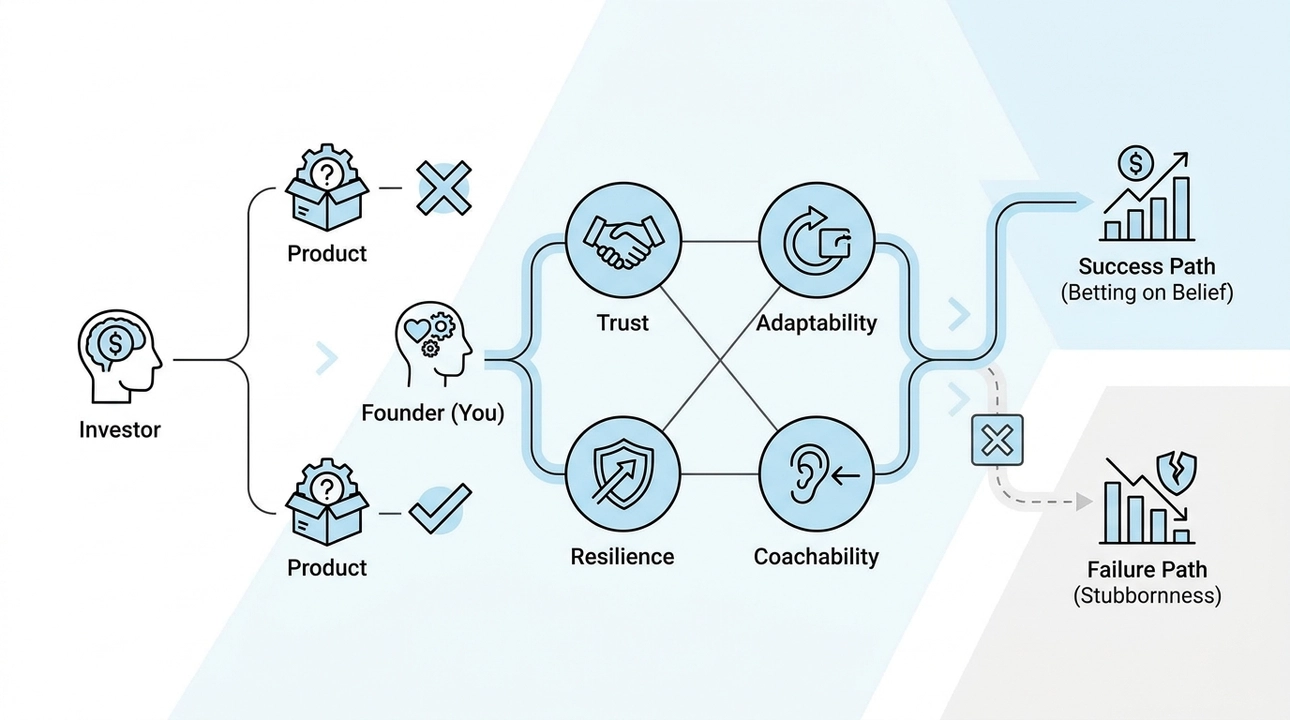
Think about it from the investor's side of the table. They are handing over real money to someone who, in most cases, has never built this specific thing before, in this specific market, at this specific moment in time. There is no guarantee. There is no certainty. What there is, or what there should be, is a relationship. A sense that this person gets it. That they are coachable. That when the market shifts or the original plan falls apart, they will not dig in stubbornly and burn the runway defending a thesis that no longer holds.
The founders who raise money are not always the ones with the best products. They are the ones who made investors feel something, trust, confidence, excitement, belief. That does not happen in a pitch deck. It happens over conversations, over time, over the quiet accumulation of small moments where someone proves they are worth betting on.
There is a real pattern here, and it shows up repeatedly. Money has gone into ideas that were not the flashiest on paper, but the founders behind them refused to give up. They kept going through the ebbs and flows. And money has also gone into ventures with genuinely impressive market opportunities, only to be pulled out when the founder would not listen, would not adapt, and would not accept that the old playbook was not working anymore. The product was fine. The founder was the problem.
That lesson is not abstract. It is expensive.
The First Investor Is Like the First Customer
There is a parallel in fundraising that does not get talked about enough. Getting your first investor is almost exactly like closing your first customer. It is the hardest one. There is no social proof, no momentum, no one else signaling that this is a safe bet. It is just you, the relationship you have built, and the belief that one person has decided to place in you.
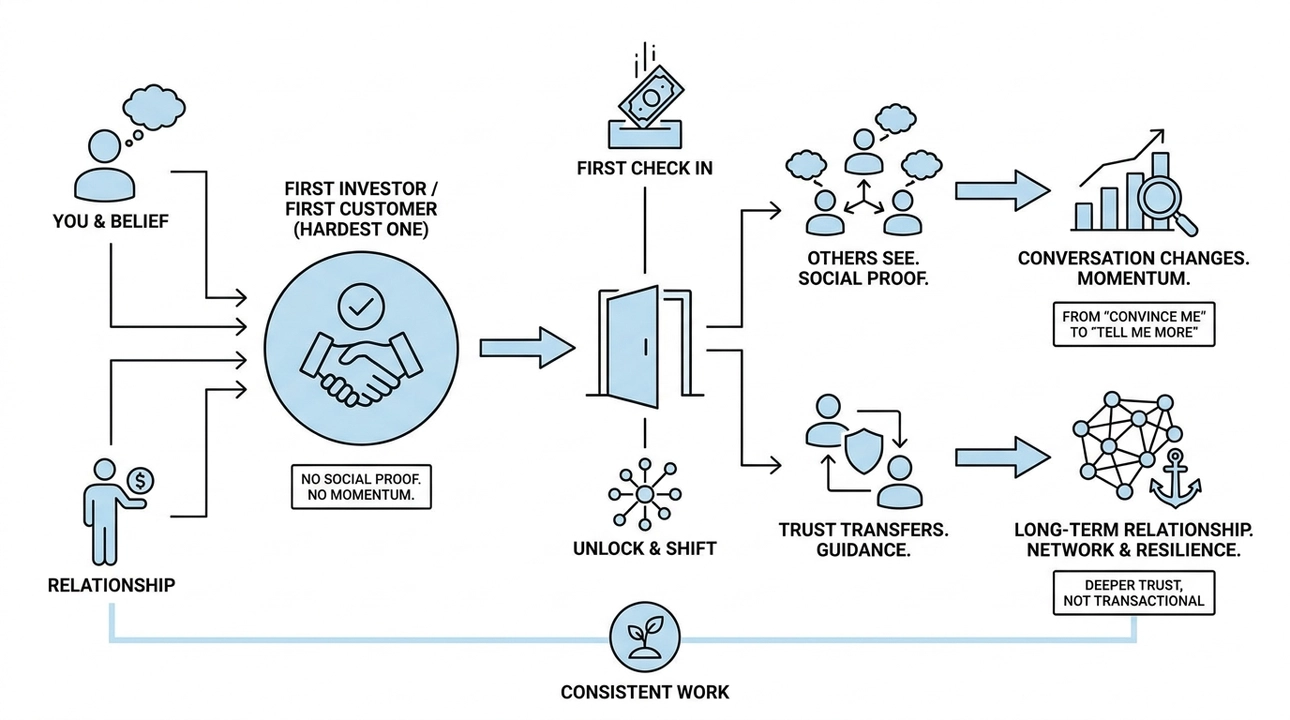
But once that first check comes in, something shifts. Other investors see that someone they respect made a move. That social proof becomes its own kind of currency. The trust transfers. The conversation changes from "convince me" to "tell me more." Getting the first lead investor across the line is often the unlock that makes the rest of the round feel possible.
This is why relationship building is not a nice-to-have in fundraising. It is the strategy. It is the work that happens long before anyone is ready to ask for money. It is showing up consistently, being genuinely curious about the people in your ecosystem, and building a reputation that precedes you when you finally do walk into that room.
And once the money is in, the work of trust does not stop. It deepens. Investors who trust a founder will guide them. They will share their network, challenge their assumptions, and stick around through rough quarters. That is a completely different dynamic than a transactional investor who is watching the numbers and waiting for an exit. The relationship is what determines which kind you attract.
The Data Room Confirms the Decision. It Does Not Make It.
Here is where a lot of founders get the sequence wrong. They think the documentation, the financial model, the patents, the go-to-market strategy, the data room, is what wins the investor. It is not. That material is important, but it plays a very different role than most people assume.
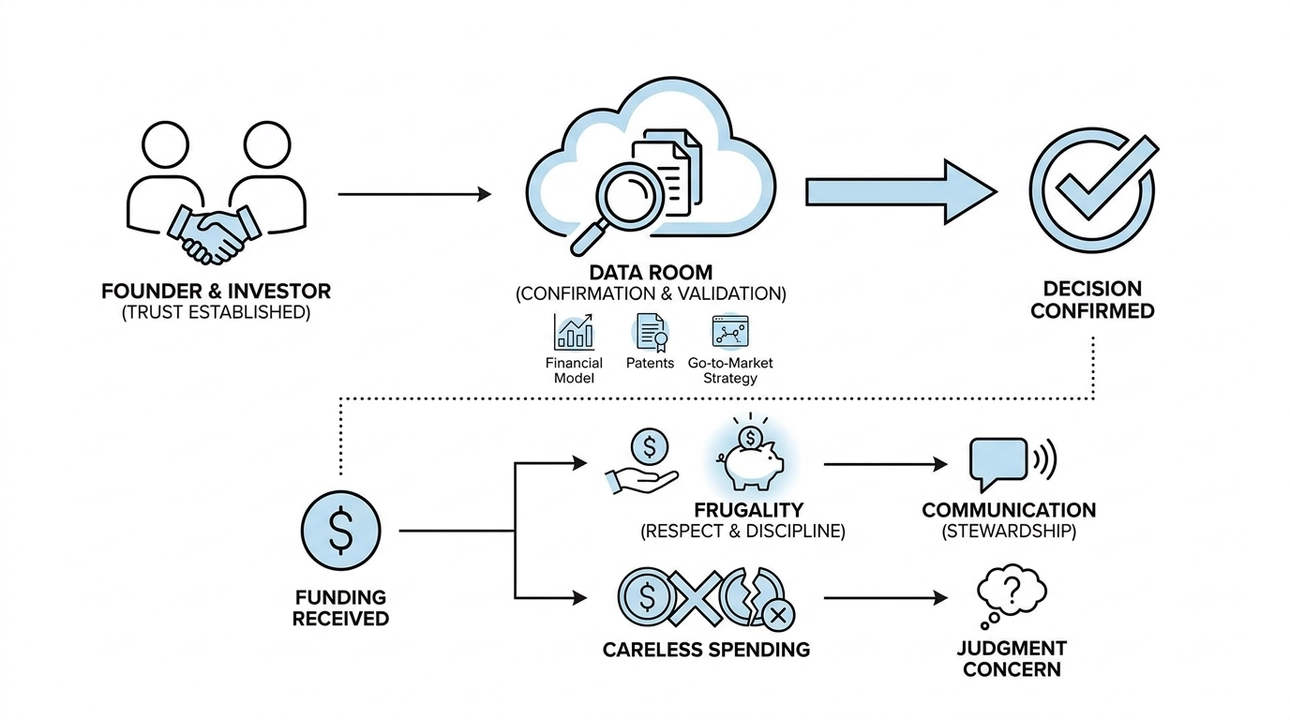
The data room is the comfort blanket. It is the part of the process where an investor who has already decided they trust you goes looking for confirmation that they made the right call. A strong data room says: yes, this person is organized, they have thought this through, the fundamentals are real. It is due diligence in the truest sense: diligence on a decision that was already made on a human level.
None of that material gets read by someone who does not already believe in the founder. Nobody opens a financial model for a company they do not care about. The trust has to come first. Everything else is just validation.
There is also something worth addressing directly about how founders handle money once it arrives. Being frugal with someone else's capital is not just good financial practice, it is a form of respect. It signals that the founder understands the weight of the trust that has been extended. Investors notice when founders spend carelessly. It tells them something important about judgment, about discipline, and about whether this person is actually ready to steward a business through the hard moments that are inevitably coming.
Frugality is a form of communication. It says: this person knows what this money means, and they are not going to waste it.
The Real Currency in Fundraising
At the end of the day, the fundraising conversation is a trust conversation. All of it. The pitch, the relationship, the first check, the data room, the way money gets spent, all of it is communicating something about who the founder is and whether they are worth believing in.
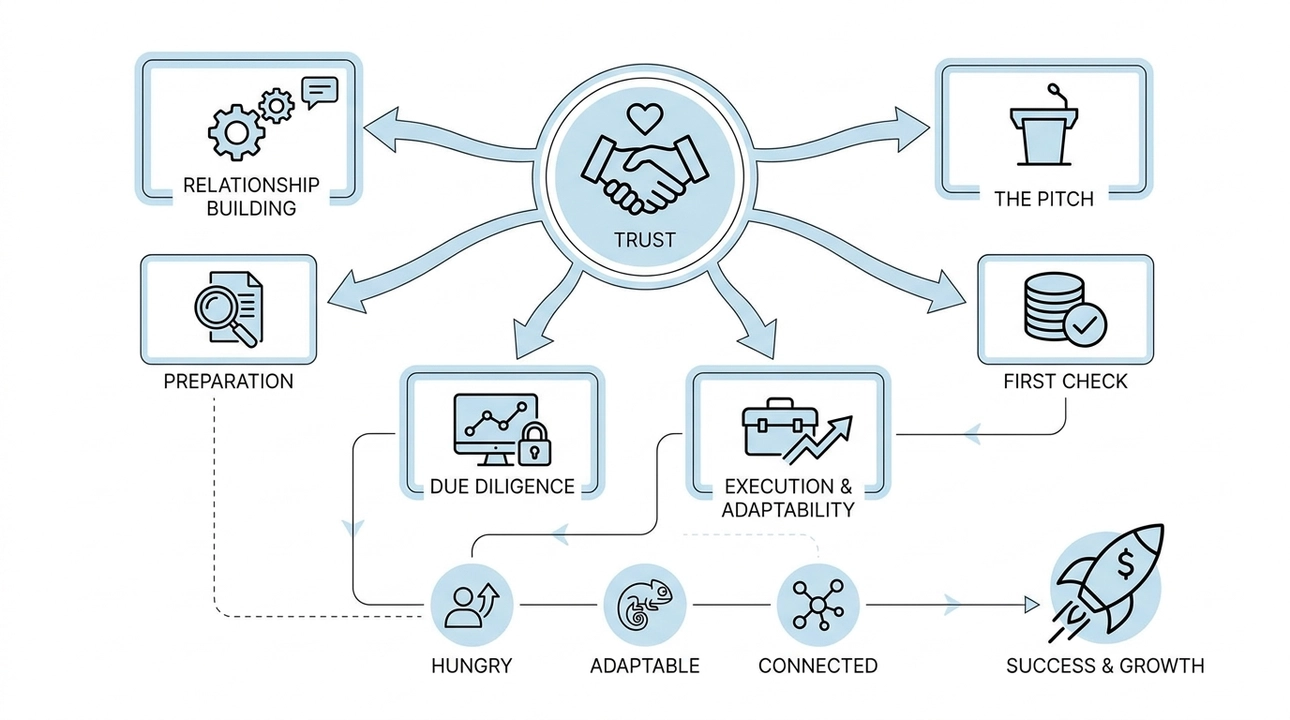
Products evolve. Markets shift. Technology changes what is possible, and trends redefine what customers want. A product that is 80 percent ready is more than enough if the person behind it is hungry, adaptable, and genuinely connected to the people they are trying to serve. Perfection is not the goal, and it should not be, because a perfect product has nowhere left to go.
The founders who raise the money, build the teams, and eventually make their investors very glad they said yes are not the ones who had the most polished decks. They are the ones who understood that trust is built before anyone asks for anything, and maintained long after the check is cashed.
That is the real work of fundraising. And it starts long before the pitch ever does.
How do you build trust?
Coming soon in another blog....
71 Hours. Three Strategies. One Clear Path Forward.
I work directly with Series A/B founders and growth-stage SMBs. 71 hours with your team and access to your data. Three strategies, three business plans. I am selectively taking on new engagements in 2026, so let's set up a call, talk about your business, and you get in the trust-building game.
Book a conversation: